- Salwan Surgicare
- 0 Comments
Mayo Scissors vs Metzenbaum Scissors: Differences, Uses, and Identification
Mayo Scissors vs Metzenbaum Scissors: Differences, Uses, and Identification
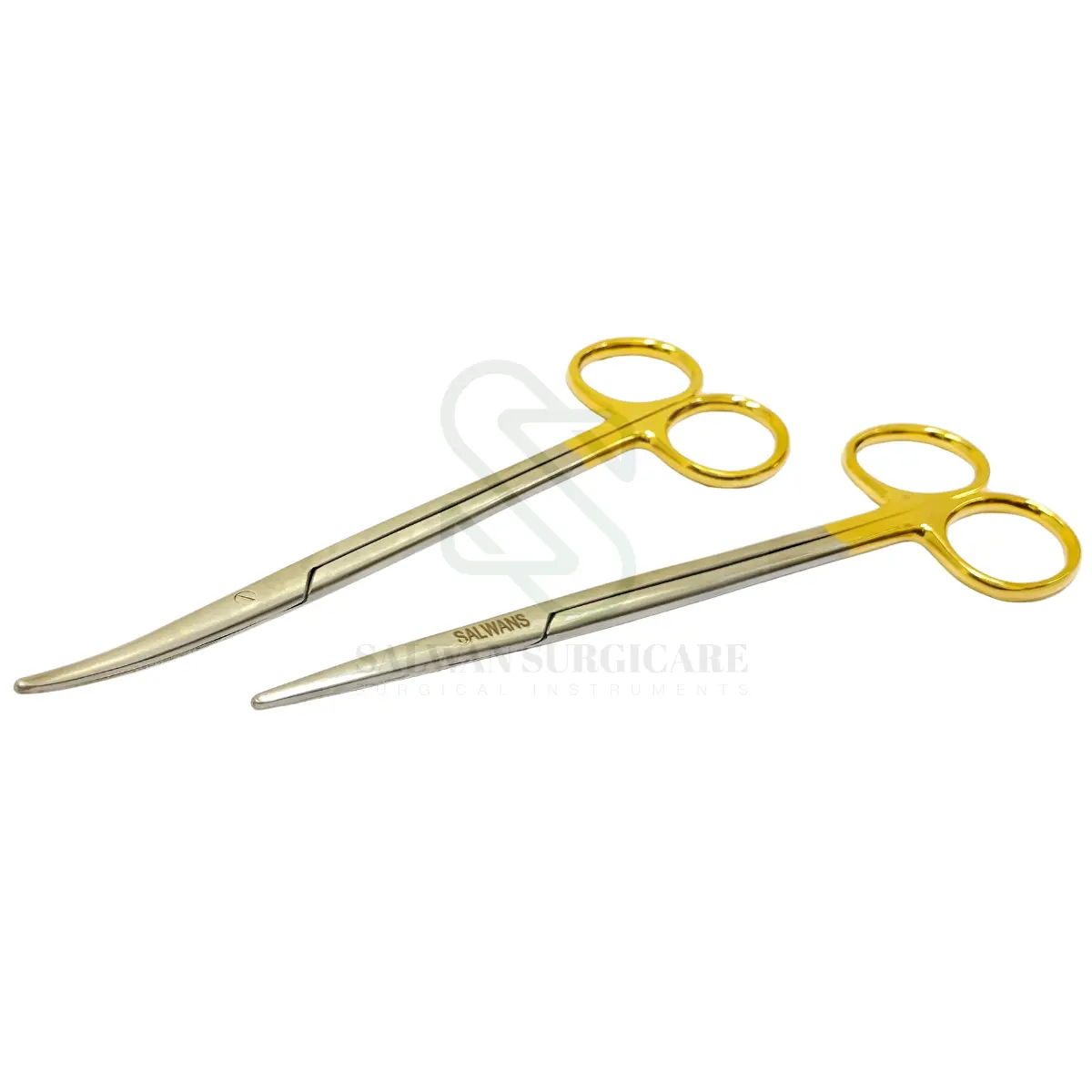
Mayo scissors and Metzenbaum scissors are two of the most common cutting instruments found on surgical trays. At first glance, they can look quite similar. Both have finger-ring handles, a central joint, and straight or curved blade options. However, they are designed for different cutting tasks.
The main difference between Mayo and Metzenbaum scissors lies in their construction and intended use. Mayo scissors have a heavier, stronger design that suits tougher tissue and surgical materials. In contrast, Metzenbaum scissors have a slimmer shape and finer blades for delicate soft-tissue dissection.
Choosing the correct scissors helps improve control and protects the cutting edges from unnecessary damage. This guide explains the Mayo scissors and Metzenbaum scissors difference, including their designs, common uses, available types, and identification features.
What Are Mayo Scissors?
Mayo scissors are robust surgical scissors designed for cutting dense tissue and materials that require greater cutting force. Their blades are usually shorter and broader than those of Metzenbaum scissors. The handles and shanks also feel heavier in the hand.
Manufacturers offer Mayo scissors in straight and curved patterns. Straight Mayo scissors are commonly associated with cutting sutures, dressings, and materials near the surface. Curved Mayo scissors provide improved access when cutting tougher tissue deeper within the surgical field.
Common Mayo scissors uses include:
- Cutting fascia and other dense connective tissue
- Cutting muscle during suitable procedures
- Trimming sutures and surgical materials
- Cutting dressings, mesh, or drains when appropriate
- Performing controlled dissection of stronger tissue
- Supporting general and orthopedic surgical procedures
Because they are built for strength, Mayo scissors should not be the first choice for very delicate tissue.
What Are Metzenbaum Scissors?
Metzenbaum scissors are lighter surgical scissors designed for cutting and dissecting delicate soft tissue. They usually have long, slender shanks with relatively fine blades and rounded or semi-blunt tips.
This design helps the user reach deeper areas while keeping the hand farther from the working end. Metzenbaum scissors may also support blunt dissection when the closed tips enter a tissue plane and then open gently to separate the tissue.
They are commonly used for soft tissues such as fat, bowel-related tissue, and other delicate structures where heavy scissors may cause unnecessary trauma.
Common Metzenbaum scissors uses include:
- Cutting delicate soft tissue
- Performing fine tissue dissection
- Separating natural tissue planes
- Working in deeper surgical areas
- Supporting general and reconstructive procedures
- Handling tissue that requires lighter cutting pressure
Metzenbaum scissors are not designed for cutting sutures, wire, or hard materials because those tasks can dull or damage their fine cutting edges.
Mayo Scissors vs Metzenbaum Scissors: Quick Comparison
| Mayo Scissors | Metzenbaum Scissors |
| Heavy and robust | Slim and lightweight |
| Shorter, broader blades | Finer blades with longer shanks |
| Tough tissue and surgical materials | Delicate soft-tissue dissection |
| Higher cutting strength | Lower and more controlled cutting |
| Straight and curved patterns | Straight and curved patterns |
| Fascia, muscle, dense tissue | Fine soft tissue, fat and delicate tissue |
| Straight pattern may be used for sutures | Suture cutting is generally avoided |
| Curved versions provide deep access | Long shanks support deep dissection |
| Firm and powerful handling | Light and precise handling |
The simplest way to remember the distinction is:
Mayo scissors provide strength, while Metzenbaum scissors provide delicacy and control.
Seven Key Differences Between Mayo and Metzenbaum Scissors
1. Overall Construction
Mayo scissors have a thicker and heavier build. Their stronger frame helps them cut resistant tissue and surgical materials.
Metzenbaum scissors have a more delicate construction. Their lighter profile helps the user make controlled movements around soft tissue.
2. Blade-to-Shank Proportion
Mayo scissors generally have broader, shorter blades and a sturdier working end.
Metzenbaum scissors usually have longer shanks and finer blades. This shape improves reach in deeper operating fields.
3. Tissue Suitability
Surgeons use Mayo scissors when the tissue demands greater cutting force. Typical examples include fascia and other dense structures.
Metzenbaum scissors suit delicate soft tissue. Using heavy Mayo scissors for fine dissection may provide less control, while using Metzenbaum scissors on dense materials can damage their blades.
4. Cutting Strength
The thick blades of Mayo scissors provide a stronger cutting action.
Metzenbaum scissors provide a finer and more controlled cut. Therefore, they perform best when precision matters more than force.
5. Common Surgical Tasks
Mayo scissors often support tissue cutting, suture cutting, and material handling.
Metzenbaum scissors mainly support delicate dissection and soft-tissue cutting. Although the instruments may appear similar, they should not be treated as interchangeable tools.
6. Instrument Weight
Mayo scissors feel noticeably heavier in the hand because of their broad blades and strong shanks.
Metzenbaum scissors feel lighter and more balanced for fine work. This difference often helps students and operating-room staff identify them quickly.
7. Visual Identification
Look at the blades first. Mayo scissors have a wider and more substantial working end. Metzenbaum scissors appear slimmer, with longer shanks and more delicate blades.
When both instruments are placed side by side, the difference becomes much easier to recognize.
Types of Metzenbaum Scissors
The most common types of Metzenbaum scissors differ by blade shape, length, cutting-edge material, and tip design.
Straight Metzenbaum Scissors
Straight Metzenbaum scissors support controlled cutting and dissection in accessible surgical areas. They may suit procedures where a straight cutting line provides better visibility.
Curved Metzenbaum Scissors
Curved Metzenbaum scissors are widely used for deeper soft-tissue dissection. The curved profile helps the working tips follow anatomical contours and improves access around surrounding structures.
Standard Metzenbaum Scissors
Standard models provide a versatile balance of reach, blade length, and handling for routine soft-tissue procedures.
Long Metzenbaum Scissors
Longer patterns allow access to deeper surgical areas. Manufacturers offer Metzenbaum scissors in several overall lengths to suit different procedures and anatomical spaces. gSource
Tungsten Carbide Metzenbaum Scissors
Some models include tungsten-carbide cutting edges for improved edge retention and cutting performance. Product ranges may also include delicate-tip and wave-cut patterns.
The correct type depends on the depth of the surgical field, tissue characteristics, and the user’s preferred handling style.
Straight vs Curved Mayo and Metzenbaum Scissors
Both instrument families are available in straight and curved patterns, but blade curvature does not remove their basic differences.
Straight Mayo scissors are often selected for surface-level cutting, sutures, dressings, or materials. Curved Mayo scissors can provide improved access when cutting dense tissue within a deeper field.
Straight Metzenbaum scissors provide precise soft-tissue cutting in accessible areas. Curved Metzenbaum scissors help users dissect delicate tissue around contours and within deeper spaces.
In general, straight scissors support a direct cutting line, while curved scissors improve access and visibility around tissue. However, the final choice should match the procedure, tissue type, and surgical technique.
How to Identify Mayo and Metzenbaum Scissors on a Surgical Tray
When identifying these instruments, check four details:
- Blade width: Mayo blades look wider and stronger.
- Shank length: Metzenbaum scissors usually have longer, slimmer shanks.
- Instrument weight: Mayo scissors feel heavier.
- Working purpose: Mayo scissors cut tougher tissue; Metzenbaum scissors dissect delicate tissue.
A simple memory aid is:
Mayo means muscle and material; Metzenbaum means delicate soft tissue.
This is not a complete clinical rule, but it can help students remember the basic design difference.
Can Mayo and Metzenbaum Scissors Be Used Interchangeably?
They may overlap in limited situations, but they should not be treated as interchangeable instruments.
Mayo scissors provide the strength needed for tougher tissue and certain materials. Metzenbaum scissors provide the precision required for delicate soft-tissue work. Using Metzenbaum scissors to cut sutures or dense tissue can dull the blades. Likewise, using heavy Mayo scissors during fine dissection may reduce control.
Therefore, selecting the instrument according to the tissue and task protects both the patient’s tissue and the instrument’s cutting performance.
Frequently Asked Questions
- What is the main difference between Mayo and Metzenbaum scissors?
Mayo scissors have a heavier construction for tougher tissue and surgical materials. Metzenbaum scissors have finer blades for delicate soft-tissue dissection.
- Which scissors are used for delicate tissue?
Metzenbaum scissors are commonly selected for cutting and dissecting delicate soft tissue.
- Which scissors are stronger?
Mayo scissors are stronger because they have thicker blades, broader shanks, and a heavier construction.
- Can Metzenbaum scissors cut sutures?
They should generally not be used for routine suture cutting because sutures and other materials may dull their fine edges.
- Are both available in straight and curved patterns?
Yes. Manufacturers commonly offer both Mayo and Metzenbaum scissors in straight and curved patterns.
- How can you quickly identify Mayo scissors?
Look for a heavier frame, shorter broad blades, and a stronger overall appearance.
Conclusion
In summary, understanding Mayo scissors vs Metzenbaum scissors allows healthcare professionals to choose the right instrument for each procedure. The difference between Mayo and Metzenbaum scissorsgoes beyond appearance and includes blade design, strength, and intended tissue use.
Both play important roles in surgery, but each performs best when used for its intended task. Understanding Mayo scissors vs Metzenbaum scissors helps students identify instruments correctly, supports efficient tray preparation, and helps healthcare professionals choose the proper scissors for the tissue being handled
Trusted Surgical Scissors Manufacturer
As a trusted surgical scissors manufacturer, Salwan Surgicare manufactures and exports over 50 types of surgical scissors for surgical specialties like general surgery, gynecology, urology, plastic surgery, neurosurgery, and more.
If you’re looking to buy surgical scissors, reach out to our team for a quick quotation.
Frequently Asked Questions
The most common tools include cranial drills for burr holes, bayonet forceps for gripping tissue, micro-scissors for fine dissection, and self-retaining retractors to maintain open surgical visibility.
The offset, zigzag handle design of bayonet forceps ensures the surgeon’s fingers and the tool handles remain outside the direct visual path, maximizing visibility down deep, narrow surgical corridors.
Modern neurosurgical perforator drills feature smart automatic clutch mechanisms that sense a drop in structural resistance, instantly halting rotation the moment they completely pass through the skull bone.
Titanium is highly biocompatible, strong, non-magnetic, and corrosion-resistant. This ensures the permanent clip safely stays inside the patient’s body long-term without causing any adverse allergic reactions.
Self-retaining retractors lock firmly onto structural frames, maintaining steady, hands-free tissue retraction. This provides an undisturbed view while allowing the surgical team to utilize both hands for complex procedures.