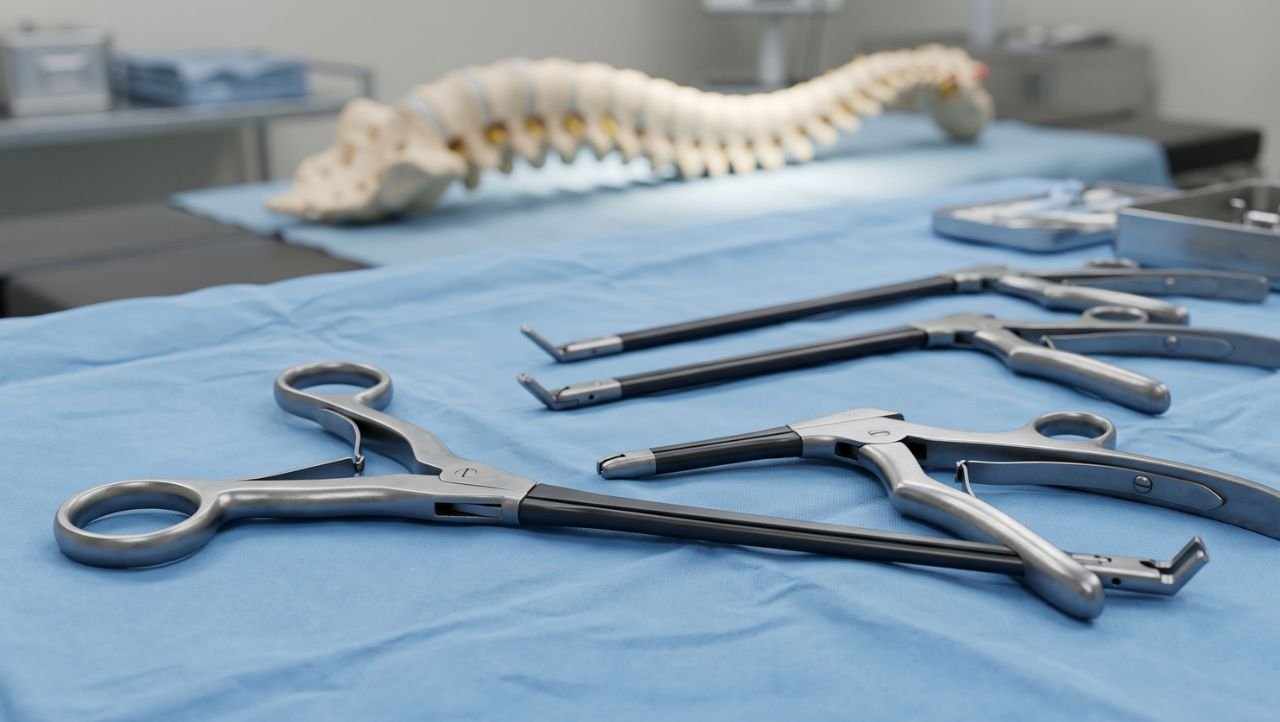
Kerrison Rongeur: Uses, Sizes, Angles and Applications in Spine Surgery
Spine surgery requires exact movements, deep access, and high control. Surgeons work close to fragile nerve roots and the spinal cord, where even small slips carry serious risks. The Kerrison-Costen Rongeur stands as a key punch-action cutter designed to safely remove small bone sections and soft tissue during deep spinal procedures. This tool gives surgeons the leverage needed to clip away bone cleanly without damaging delicate neural tissue underneath. Healthcare teams trust these high-quality bone-cutting instruments to maintain speed, safety, and sharp performance in operating rooms.
Understanding how this instrument functions, along with its full range of sizes and shaft angles, helps medical teams and buyers choose the right tools for complex surgeries.
What is a Kerrison Rongeur?
A Kerrison Rongeur also known as a Kerrison Punch, is a specialized, lever-action surgical instrument created specifically for bone excision and tissue clearance, making it one of the most essential high-quality bone-cutting instruments in spine surgery. Unlike standard cutting pliers or dual-cup rongeurs that press down from the top, a Kerrison uses a sliding guillotine mechanism.
The instrument features a thin, flat bottom plate called a footplate. The surgeon slides this footplate under the bone edge. When the handle is squeezed, a top cutting blade glides forward across the fixed footplate, punching through the bone. Because the cutting force stays contained between the top blade and the footplate, the tool does not press down against the spinal cord or surrounding nerves. This unique design makes it indispensable for spinal decompression.
Key Parts of the Instrument
The clean cutting action of this tool relies on a balanced mechanical design:
- Ergonomic Handle: Built with a spring system that resets the jaw automatically after every bite, easing hand strain during long surgeries.
- Long, Slim Shaft: Reaches into narrow, deep surgical areas while keeping the surgeon’s hand from blocking the view.
- Footplate (Anvil): Rests under the target bone, shielding underlying dura and nerves from blade exposure.
- Cutting Jaw: The sharp moving blade that cuts small bone pieces against the footplate.
Common Sizes in Spine Surgery
Choosing the correct jaw bite size is vital for safety and workflow. Bite sizes generally range from 1 mm up to 6 mm:
| Jaw Size | Primary Surgical Area | Clinical Purpose |
| 1 mm – 2 mm | Cervical Spine (Neck) | Precise work near delicate nerve roots and narrow corridors. |
| 3 mm – 4 mm | Thoracic & Lumbar Spine | Standard removal of bone along medium-sized vertebral arches. |
| 5 mm – 6 mm | Lower Lumbar Spine | Fast clearance of thick bone structures where room allows. |
Using the right jaw width allows surgeons to utilize these high-quality bone-cutting instruments to trim bone in controlled steps without taking away too much structural support. Shaft lengths also vary, typically ranging from 7 to 11 inches, allowing surgeons to work at different depths.
To learn more about specific model options, sizes, and technical features, explore the full Kerrison Rongeur product specifications.
Jaw Angles and Biting Directions
The direction of the cutting tip determines how the instrument approaches the target bone:
1. Up-Biting Jaws
The cutting blade moves upward toward the top handle side. This design is used most often in laminectomy procedures. The surgeon slides the footplate under the lower bone rim and pulls away from the spinal cord, making up-biting models a versatile standard for most spinal cases.
2. Down-Biting Jaws
The blade cuts downward toward the footplate’s bottom face. Down-biting options work best when the surgical approach starts above the bone section, such as in specialized anterior or lateral approaches where pulling upward would block visibility.
3. Angled Shafts (40° and 90°)
- 40-Degree Angle: Slants forward slightly to match natural line-of-sight angles during open or minimally invasive procedures.
- 90-Degree Angle: Sets the jaw at a right angle to the shaft, giving better leverage in deep, tight spaces where straight tools cannot reach.
Primary Applications in Spine Surgery
These surgical instruments play essential roles across multiple procedures:
- Laminectomy and Laminotomy: Removing parts of the vertebral arch to relieve pressure on the spinal canal.
- Foraminotomy: Trimming bone spurs along the nerve root exits to reduce shooting pain and numbness.
- Ligamentum Flavum Resection: Snipping away thickened, stiffened ligaments that press into the spinal channel.
- Discectomy Preparation: Removing bone edges around the intervertebral disc to make room for soft tissue tools.
Essential Care and Sterilization
To keep bone punches performing smoothly, operating room teams must follow proper maintenance practices:
- Immediate Rinsing: Flush tissue and bone debris from the track using distilled water right after use.
- Ultrasonic Cleaning: Use ultrasonic washing cycles to lift hidden debris out of internal sliding tracks.
- Lubrication: Apply steam-permeable, medical-grade lubricant to moving parts to prevent friction wear.
- Detachable Designs: Use take-apart or ejector models when possible. These allow full opening of internal shafts for thorough cleaning and sterilization.
Upgrade Your Surgical Inventory with Salwan Surgicare
Equipping operating rooms with reliable surgical instruments requires a manufacturing partner committed to exact engineering and durability. Salwan Surgicare delivers medical-grade stainless steel and titanium instruments to hospitals, surgical centers, and healthcare distributors around the world. Operating since 1997, the company produces over 38,000 distinct items, spanning general surgery, orthopedics, neurosurgery, and spinal care.
All products strictly follow ISO 13485:2016, CE, and FDA quality guidelines, guaranteeing uniform performance and structural strength in every batch. Backed by a comprehensive 1-year warranty against rust and material breakage, Salwan Surgicare offers a trusted direct-from-factory source for high-volume orders. Partner with Salwan Surgicare to secure durable, precision-crafted tools for your surgical teams today.
Frequently Asked Questions
It is used in spine surgery to punch away small pieces of bone and tough ligament tissue. Its flat footplate shields the spinal cord and underlying nerves from accidental contact during cutting.
Surgeons choose up-biting models when pulling bone away from the spinal cord. Down-biting options are selected when approaching the bone from an upper angle or working in specialized lateral access corridors.
Detachable models open completely along the sliding shaft. This feature allows surgical staff to thoroughly clean internal channels, eliminating hidden bio-burden and ensuring complete autoclave sterilization between procedures.
Cervical procedures require fine, narrow bite sizes of 1 mm to 2 mm. These smaller sizes allow precise bone removal in tight spaces without putting pressure on delicate cervical nerve roots.
Premium surgical tools use high-grade AISI 410 or 420 stainless steel. These medical alloys retain sharp cutting edges through repeated use and resist rusting under high-temperature steam sterilization cycles.