Veress Needle in Laparoscopy: Uses, Parts, Insertion Technique and Entry
Laparoscopic surgery begins with a single, critical step: safely creating a pneumoperitoneum so the surgical team can see and work inside the abdominal cavity. The Veress needle is one of the oldest and most widely used tools for this purpose, helping surgeons establish gas insufflation before trocars and other laparoscopic instruments are introduced. Despite the growth of alternative entry techniques, the Veress needle remains a standard part of many operating room protocols worldwide because of its simplicity and reliability when used correctly.
In this blog, we cover what a Veress needle is, its key parts, how it’s used during laparoscopic entry, and the insertion technique surgeons follow to minimise complications. If your facility is equipping for laparoscopic procedures, understanding this instrument alongside trocars, graspers, and other laparoscopic instruments helps you build a complete, dependable surgical setup.
What Is a Veress Needle?
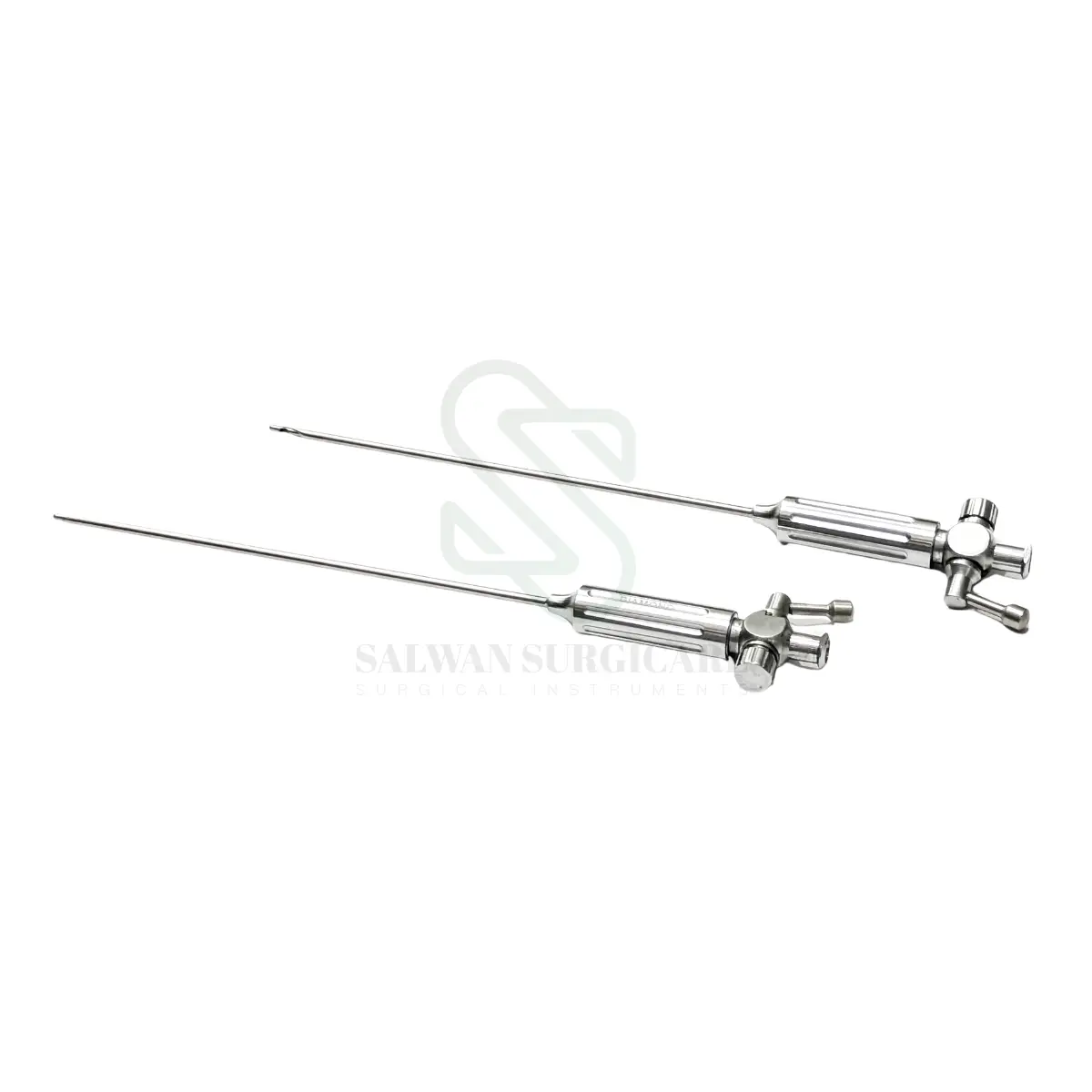
A Veress needle is a spring-loaded needle used to create a pneumoperitoneum — a gas-filled abdominal cavity — before laparoscopic instruments are introduced through trocars. First developed in 1932 and later adapted for laparoscopic surgery, it remains one of the three standard approaches to laparoscopic entry, alongside the open (Hasson) technique and direct trocar insertion.
The needle consists of an outer sharp cannula and an inner spring-loaded, blunt-tipped stylet. As the needle passes through the resistant layers of the abdominal wall, the sharp outer tip does the cutting; once it enters the low-resistance peritoneal cavity, the spring mechanism automatically advances the blunt inner stylet forward to shield surrounding organs from injury.
Parts of a Veress Needle
Understanding the anatomy of the instrument helps explain why it’s considered a comparatively safe entry tool when used with proper technique:
- Outer sharp needle/cannula — cuts through skin, fascia, and peritoneum
- Spring-loaded inner stylet — blunt-tipped; retracts under resistance and springs forward once resistance is lost
- Handle — provides grip and control during insertion, often with a visible spring-loaded indicator
- Insufflation port — connects to the CO2 gas line to create the pneumoperitoneum
- Stopcock/valve — regulates gas flow once intraperitoneal position is confirmed
Standard Veress needles measure 12–15 cm in length with an external diameter of around 2 mm, though longer needles are available for use in patients with a higher body mass index.
How the Veress Needle Is Used in Laparoscopic Entry
Before any laparoscopic instrument — trocar, grasper, or scope — can be introduced, the surgical team needs a stable, gas-distended abdominal cavity. The Veress needle achieves this through a blind, or “closed,” entry technique performed at the umbilicus or Palmer’s point (left upper quadrant), depending on the patient’s surgical history.
Once the needle is confirmed to be correctly placed inside the peritoneal cavity, CO2 gas is insufflated to a target pressure — typically 12–15 mmHg — creating the working space needed for trocar placement and subsequent instrument insertion.
Step-by-Step Veress Needle Insertion Technique
1. Site selection — choose the umbilicus or Palmer’s point based on patient anatomy and surgical history.
2. Elevate the abdominal wall — grasp and lift the skin with towel clips or by hand to increase the distance to underlying viscera.
3. Insert at the correct angle — typically 45° in average-weight patients, closer to 90° in obese patients.
4. Feel for the “double click” or “pop” — a characteristic sensation as the needle passes through fascia and peritoneum, confirming the spring-loaded stylet has advanced.
5. Confirm placement — run verification checks: saline aspiration test, hanging drop test, and initial insufflation pressure reading.
6. Begin insufflation — start gas flow at a low rate, monitoring intra-abdominal pressure closely.
7. Proceed to trocar insertion — once adequate pneumoperitoneum is achieved, the primary trocar is introduced along the same tract.
Confirmation Tests and Safety Checks
Because incorrect Veress needle placement can lead to complications such as extraperitoneal insufflation, vascular injury, or visceral puncture, surgeons rely on several confirmation checks before committing to full insufflation: the saline aspiration test (checking for blood, bowel content, or urine), the hanging drop test (a drop of saline should be drawn into the needle hub by negative intra-abdominal pressure), and monitoring of initial insufflation pressure, which should remain low — typically under 10 mmHg — if the needle is correctly placed intraperitoneally. If any test suggests malposition, the needle should be withdrawn and reinserted before insufflation continues.
Veress Needle vs Other Laparoscopic Entry Techniques
The Veress needle (closed) technique is one of three standard laparoscopic entry approaches; the other two are the open Hasson technique, which uses a Hasson trocar inserted under direct vision through a small incision, and direct trocar insertion performed without prior needle insufflation. Each method has its advocates, and the choice often depends on surgeon experience, patient anatomy, and prior abdominal surgery. Facilities equipping for laparoscopic procedures typically stock both Veress needles and a range of trocars — including standard and 5 mm configurations — to give surgeons flexibility based on the clinical picture.
Equip Your OR With Complete Laparoscopic Entry & Access Instruments
Trocars, cannulas, graspers and full laparoscopic sets — engineered for reliable, repeatable entry every time.
EXPLORE LAPAROSCOPIC INSTRUMENTSWhy Choose Salwan Surgicare for Laparoscopic Instruments
As a trusted surgical instruments manufacturer and exporter since 1997, Salwan Surgicare supplies CE and ISO 13485:2016 certified laparoscopic instruments, including a full range of trocars, graspers, and scissors, to hospitals and distributors worldwide. Every instrument is manufactured from medical-grade stainless steel, tested for repeated sterilisation, and backed by a 1-year quality guarantee.
Conclusion
The Veress needle remains a trusted, time-tested tool for establishing pneumoperitoneum safely when handled with correct technique and verification checks. Alongside trocars, graspers, and scissors, it forms part of the essential toolkit every laparoscopic operating room needs. Understanding its parts, insertion steps, and safety checks helps surgical teams reduce entry-related complications and work confidently from the very first step of the procedure.
Browse Our Complete Range of Trocars & Laparoscopic Access Instruments
Trocars, cannulas, graspers and full laparoscopic sets — engineered for reliable, repeatable entry every time.
EXPLORE LAPAROSCOPIC INSTRUMENTS