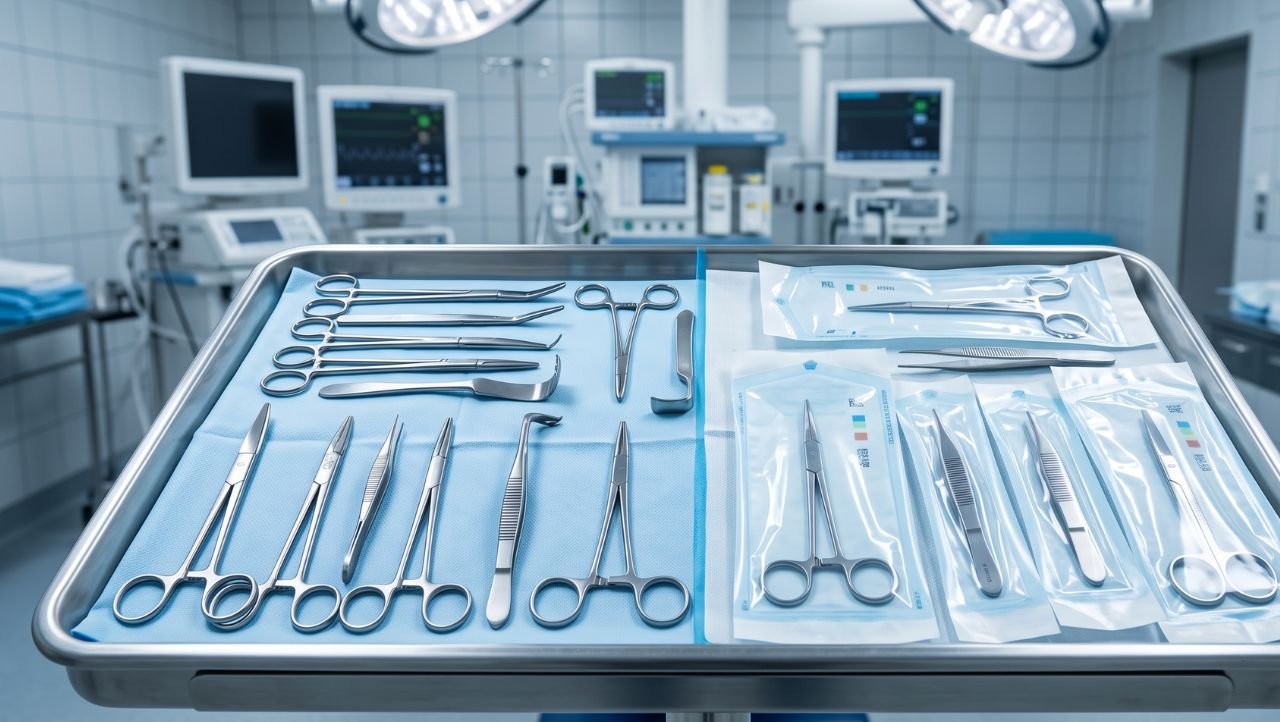
Reusable vs Disposable Surgical Instruments: Benefits, Risks and Which Is Better?
Both disposable surgical instruments and reusable options serve distinct clinical functions such as reusables offer long-term cost efficiency, higher tensile strength, and reduced environmental impact, while disposables eliminate cross-contamination risks and sterilization overheads. Reusable tools remain superior for complex, precision-heavy surgeries, whereas single-use options suit high-turnover outpatient settings. Choosing the best surgical instruments depends on clinical workflow, institutional budget, and infection control requirements.
In this comprehensive guide, you will discover the functional differences, financial impacts, safety risks, and environmental factors comparing reusable and disposable surgical instruments.
Understanding Surgical Instruments: Reusable vs. Disposable
Modern healthcare facilities face critical choices regarding operative inventory management. Selecting appropriate surgical instruments impacts clinical outcomes, facility budgets, and patient safety protocols.
Reusable vs. Disposable
- Material Composition: Reusable tools are made from high-grade medical stainless steel, whereas disposable tools use low-grade steel or ABS plastics.
- Structural Rigidity: Reusable tools offer high tactile feedback and strength, while disposable tools provide moderate to low mechanical strength.
- Infection Risk: Reusable tools require strict CSSD validation, while disposable tools carry zero risk of cross-contamination.
- Upfront Capital Expense: Reusable tools have a higher initial purchase cost, whereas disposable tools feature a lower per-unit acquisition cost.
- Long-Term Financials: Reusable tools result in a lower long-term cost per case, while disposable tools require continuous recurring purchases.
- Environmental Footprint: Reusable tools produce a low long-term solid waste volume, whereas disposable tools generate high biohazard plastic and metal waste.
Reusable Surgical Instruments: Features, Benefits, and Risks
High-grade reusable instruments form the backbone of operating rooms globally. Manufactured from surgical-grade stainless steel, these tools undergo strict cleaning, decontamination, and sterilization cycles.
Key Benefits of Reusable Tools
- Superior Tactile Precision: Provides excellent grip, tactile feedback, and structural balance during surgical procedures.
- Cost-Effective Longevity: High durability leads to a significantly lower cost per procedure over time.
- Environmental Sustainability: Generates minimal medical waste compared to single-use plastic options.
- High Thermal Resistance: Endures repeated autoclaving cycles without structural degradation.
Potential Risks of Reusable Options
- Sterilization Failures: Inadequate processing in the Central Sterile Supply Department (CSSD) can cause cross-contamination.
- Wear and Tear: Repeated usage leads to dulling of cutting edges, alignment drift, or corrosion over extended periods.
- High Operational Maintenance: Demands continuous expenditure on labor, ultrasonic cleaners, and chemical disinfectants.
Disposable Surgical Instruments: Features, Benefits, and Risks
Single-use devices come pre-sterilized from the factory and are discarded after one surgical application.
Key Benefits of Disposable Tools
- Guaranteed Sterility: Completely eliminates hospital-acquired infection (HAI) risks from tools.
- Immediate Readiness: Removes delays caused by CSSD processing backlogs in emergency rooms.
- Zero Maintenance Costs: Eliminates autoclaving, chemical purchasing, and sharpening expenses.
Potential Risks of Disposable Options
- Performance Limitations: Lightweight materials offer less tactile control during complex operative maneuvers.
- High Long-Term Expenditures: Continuous procurement creates escalating recurring operational expenses.
- Environmental Degradation: Generates huge volumes of non-biodegradable medical and plastic waste.
Use of Disposable Surgical Instruments
- Single-use scalpels and plastic-handled utility forceps.
- Disposable skin staplers and clip applicators.
- High-turnover outpatient diagnostic kits and biopsy punches.
Clinical, Economic, and Environmental Impact
Choosing between reusable and disposable surgical instruments involves evaluating three key factors, including:
1. Clinical Performance & Tactile Sensitivity
Complex procedures in neurosurgery, orthopedics, and cardiovascular surgery demand high structural stability. Premium reusable surgical instruments provide consistent alignment, weight distribution, and tactile feedback. Single-use equivalents often lack the exact balance required for microscopic dissections.
2. Financial Life-Cycle Analysis
While single-use products feature lower initial purchase points, continuous reordering creates higher long-term costs. Reusable medical devices require upfront capital investments but deliver significant long-term savings across thousands of surgical cases.
3. Ecological & Environmental Responsibility
Environmental sustainability is a core concern for healthcare procurement teams. Disposable items generate massive volumes of hazardous waste requiring incineration, whereas reusable steel instruments minimize carbon footprints over multi-year lifespans.
Which Option Is Better for Your Healthcare Facility?
Selecting the best surgical instruments relies on matching instrument properties with clinical requirements:
- Choose Reusable Instruments When: Operating in main surgical suites, executing complex open or laparoscopic procedures, and prioritizing long-term budget management alongside sustainability.
- Choose Disposable Options When: Working in field environments, handling highly infectious isolation cases, or running high-speed outpatient clinics where CSSD infrastructure is unavailable.
Key Reusable Instruments Provided by Salwan Surgicare
- Dissecting Forceps: Engineered with anatomical grips for non-traumatic tissue handling during intricate surgical procedures.
- Mayo Scissors: Heavy-duty cutting instruments built for dissecting tough tissues, fascia, and suture materials.
- Crile Hemostatic Clamps: Designed to occlude blood vessels securely and control bleeding during surgery.
- Kelly Forceps: Precision clamping tools used for clamping larger blood vessels or grasping tissue.
- Babcock Tissue Forceps: Non-perforating clamps designed to grasp delicate internal organs and tubular tissues.
- Allis Tissue Forceps: Serrated instruments offering firm traction on dense fascia and surrounding structures.
- Metzenbaum Scissors: Delicate surgical scissors crafted for fine tissue dissection and precise cutting operations.
- DeBakey Vascular Forceps: Atraumatic forcep designs optimized for delicate cardiovascular and vascular manipulation.
- Needle Holders (Mayo-Hegar & Crile-Wood): Tungsten carbide jaw designs providing firm needle stabilization during suturing.
- Surgical Retractors (Senn, US Army, Langenbeck): Ergonomic tools holding back tissues or organs to expose the surgical site.
- Surgical Trocars & Cannulas: Durable laparoscopic access points engineered for repeated access during minimally invasive procedures.
- Rongeurs & Bone Cutters: High-tensile orthopedic cutting instruments designed to slice through heavy bone tissue.
Partner with Salwan Surgicare for Surgical Excellence
Elevate your operating theater’s precision, safety, and operational efficiency with world-class healthcare tools. Salwan Surgicare brings over 28 years of manufacturing expertise, delivering hospital-grade, CE and ISO-certified reusable surgical instruments to top medical facilities worldwide.
Why Healthcare Leaders Choose Salwan Surgicare:
- Uncompromising Precision
- Extensive Product Catalog
- Backed by Quality Guarantees
- Global Supply Reliability
Contact Salwan Surgicare today to request a custom quotation or explore our detailed product catalogues!
Frequently Asked Questions
Yes. When processed according to standardized hospital CSSD autoclaving protocols, high-grade reusable tools provide exceptional safety, structural strength, and precision for complex procedures.
Hospitals prefer reusable options because they provide superior tactile feedback, long-term cost efficiency per procedure, and significantly reduce biohazardous environmental plastic waste.
With proper cleaning, passivation, and careful handling, premium stainless steel instruments can last for several years, enduring thousands of sterilization cycles smoothly.
High-quality medical instruments must comply with international standards such as ISO 13485:2016, ISO 9001:2015, and CE certifications to ensure safety and performance.
Yes, Salwan Surgicare provides a comprehensive 1-year quality guarantee covering material integrity, rusting resistance, and manufacturing defects on all surgical tools.