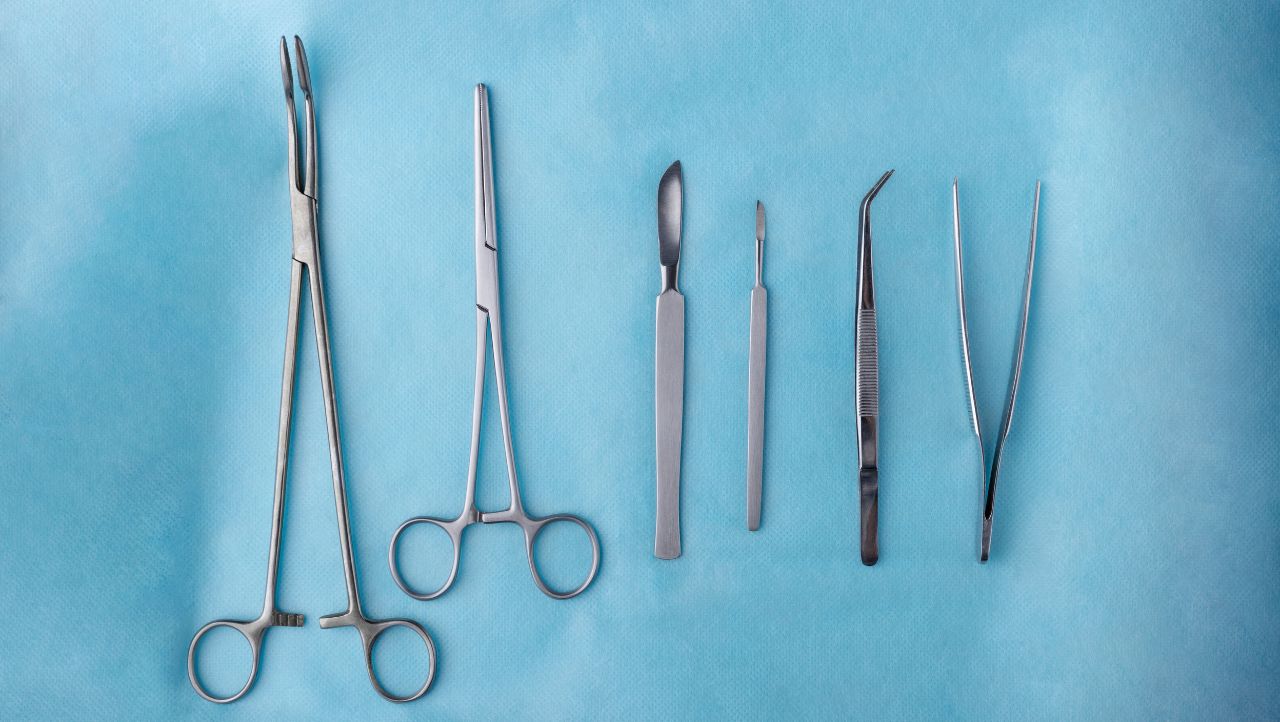
How to Use Laparoscopic Instruments: A Complete Guide
Laparoscopic procedures have totally transformed modern surgery. They’ve made operations far less invasive, helped patients bounce back faster, and enabled incredible precision. At the very heart of this medical leap are laparoscopic instruments. These tools are what allow surgeons to pull off complex moves through tiny incisions with some seriously impressive accuracy.
In this guide, we’re going to walk through how these tools actually work, the different types you’ll encounter, and some pro-level best practices.
What Are Laparoscopic Instruments?
Think of laparoscopic instruments as specialized surgical tools designed for minimally invasive procedures. Unlike the bulky tools used in traditional “open” surgery, these are long, slender, and designed to slide through small incisions using ports called trocars.
These tools don’t work alone; they team up with a laparoscope, a device with a high-def camera that sends a magnified view of the body’s interior to a monitor. This setup lets surgeons see exactly what they’re doing without needing to make large, painful cuts.
Most laparoscopic surgery instruments are made of high-grade stainless steel and consist of three parts: handle, shaft, and working tip.
Types of Laparoscopic Instruments
You’ve got to know the gear before you can master the technique. Here’s a breakdown of the essentials:
1. Visualization Instruments
- Laparoscope it provides a clear internal view
- Light source and camera systems
These are the most important pieces of the puzzle because they guide every single move during the operation.
2. Access Instruments
- Trocars and cannulas
- Veress needle
They create the entry points and keep the abdomen inflated so there’s actually room to move around.
3. Tissue Manipulation Instruments
- Graspers
- Forceps
- Retractors
These help the surgeon hold, shift, and stabilize tissue with total precision.
4. Cutting and Dissecting Instruments
- Scissors
- Dissectors
Used for separating and cutting tissues during procedures.
5. Suturing and Closure Instruments
- Needle holders
- Clip appliers
- Staplers
When it’s time to wrap things up, these are used to close wounds and secure tissues internally.
6. Energy Devices
- Monopolar and bipolar cautery
- Ultrasonic tools
These are high-tech tools that help cut and seal tissue while keeping bleeding to an absolute minimum.
When selecting the best laparoscopic instruments, surgeons consider precision, ergonomics, and compatibility with specific procedures.
Step-by-Step: How to Use Laparoscopic Instruments
Let’s break down the actual workflow in a simplified way.
Step 1: Preparation and Setup
- Patient is placed under anesthesia
- The surgical area is sterilized
- Instruments are checked for functionality and sterility
Proper setup ensures smooth handling and safety throughout the procedure.
Step 2: Creating Access Points
- Small incisions (usually 0.5–1 cm) are made
- Trocars are inserted
- Carbon dioxide gas inflates the abdomen to create space
This step allows safe insertion of laparoscopic surgery instruments.
Step 3: Inserting the Laparoscope
- The laparoscope is introduced through one trocar
- Internal visuals are displayed on a monitor
This becomes the surgeon’s “eyes” during the procedure.
Step 4: Instrument Manipulation
- Instruments like graspers and dissectors are inserted through other ports
- Movements are controlled externally via handles
- Precision is key; small hand movements translate into fine internal actions
Because of their long shafts, mastering coordination is crucial.
Step 5: Performing the Procedure
Depending on the surgery:
- Graspers hold tissues
- Scissors cut
- Energy devices control bleeding
- Needle holders assist in suturing
These coordinated actions define effective use of laparoscopic instruments.
Step 6: Suturing and Closure
- Internal suturing or clipping is performed
- Instruments are carefully withdrawn
- Incisions are closed with minimal scarring
Best Practices for Using Laparoscopic Instruments
Using the best laparoscopic instruments effectively isn’t just about having the gear; it’s about how you use it. Here are some tips:
- Master Hand-Eye Coordination: Since you’re looking at a screen instead of your hands, you have to train your brain to handle depth perception in a 2D space.
- Focus on Ergonomics: Modern tools are built for comfort. Use the rotating handles and locking triggers to keep your hands from cramping up during long cases.
- Choose the Right Size: Most tools come in 3 mm, 5 mm, and 10 mm. Picking the right size means less trauma to the patient and better control for the surgeon.
- Watch the Insulation: For energy tools, make sure the insulation is intact. This prevents accidental burns to the surrounding tissue.
- Maintain the Gear: After the surgery, everything needs to be cleaned, inspected, and sterilized perfectly to keep the performance top-notch for the next patient.
Common Applications
You’ll see these tools used in all sorts of common surgeries, like:
- Gallbladder removal (cholecystectomy).
- Hernia repairs.
- Appendectomies.
- Bariatric (weight loss) surgery. These allow for complex fixes with way less pain and much faster recovery times.
Challenges and the Learning Curve
Laparoscopy isn’t without its hurdles. There’s a bit of a learning curve because you don’t get the same “tactile feel” you do in open surgery. It requires specialized training to master that screen-to-hand coordination. But with practice and high-quality tools, these challenges become second nature.
Why Quality Matters
Not all tools are created equal. When you invest in the best laparoscopic instruments, you’re getting better precision, tools that last longer, and, most importantly, better outcomes for the patient. Reliable tools are non-negotiable for safety and efficiency.
Salwan Surgicare: Precision You Can Trust in Laparoscopic Solutions
At Salwan Surgicare, we take pride in delivering high-quality surgical solutions tailored to modern healthcare needs. Our extensive range of laparoscopic instruments is designed with precision engineering, ensuring reliability, durability, and optimal performance in every procedure.
We understand that surgeons require tools they can trust. That’s why our laparoscopic surgery instruments undergo strict quality checks and adhere to global medical standards. From graspers and trocars to advanced energy devices, we provide everything needed for seamless minimally invasive procedures.
Our commitment goes beyond products; we focus on supporting healthcare professionals with dependable solutions that enhance surgical outcomes. If you’re looking for the best laparoscopic instruments, Salwan Surgicare is your trusted partner in advancing surgical excellence.
Frequently Asked Questions
They are used in minimally invasive surgeries to perform precise procedures through small incisions with faster patient recovery.
They require training and practice, especially for coordination, but become easier to handle with consistent surgical experience.
A laparoscope with a camera sends real-time images to a monitor, guiding every movement during the procedure.
They offer superior precision, ergonomic design, durability, and reliable performance, ensuring safer and more efficient surgical procedures.
They are thoroughly cleaned, sterilized, and inspected after each use to maintain hygiene, functionality, and long-term performance.