
Description
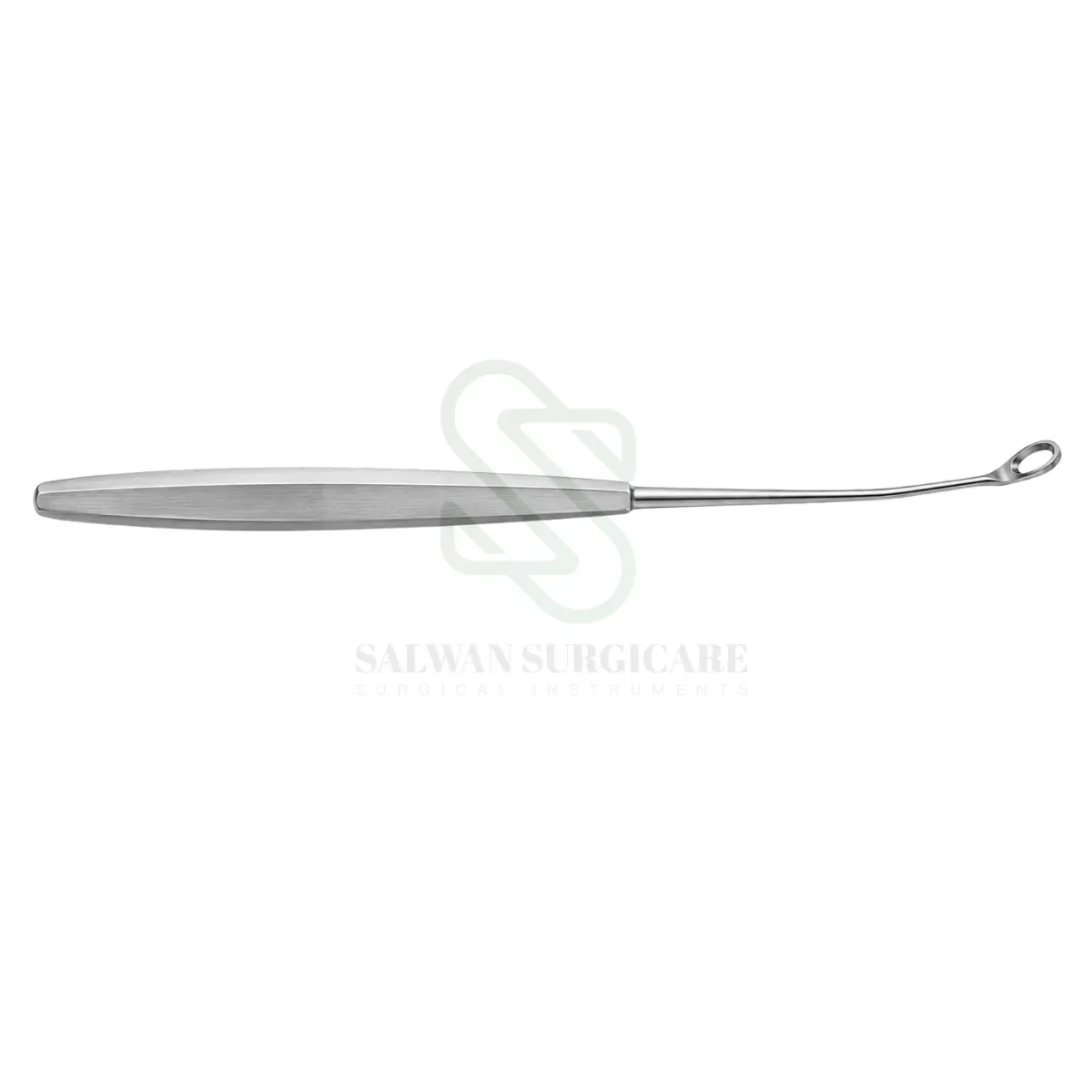
Antrum Curette Backward Cutting is a specialised ENT surgical instrument designed for controlled curettage and removal of suitable tissue within the maxillary antrum and sinus region. Its backward-cutting working end allows tissue to be engaged during a controlled pulling motion.
Salwan Surgicare is an ENT instruments manufacturer in India supplying Antrum Curette Backward Cutting instruments to hospitals, ENT departments, surgical centres, procurement companies, healthcare organisations, surgical equipment distributors, and OEM partners worldwide.
Also described as a Backward Cutting Antrum Curette, the instrument features an elongated shaft with a specialised curette working end. This configuration provides access to confined areas while keeping the handle conveniently positioned for manual control.
The backward-cutting design allows the working end to perform curettage as the instrument is drawn toward the surgeon. This can provide a useful cutting direction when working within suitable areas of the maxillary sinus.
Antrum Curette Uses
Antrum Curette Backward Cutting is primarily used for controlled curettage within the maxillary antrum during suitable ENT and sinus procedures. It can assist with removing appropriate tissue or material from the operative area.
The working end is positioned at the selected site under appropriate surgical access and visualisation. A controlled backward or pulling movement then allows the curette edge to engage the targeted material.
Its elongated shaft provides reach into the sinus region while allowing the surgeon to maintain control from the handle. Therefore, the instrument can be useful where access with conventional short curettes is limited.
The instrument may be used alongside forceps, suction instruments, probes, elevators, and other appropriate sinus surgery instruments.
Benefits of Antrum Curette Backward Cutting
The backward-cutting working end provides a specific cutting direction for controlled curettage. As a result, the surgeon can engage suitable tissue or material while withdrawing the instrument.
Its elongated profile supports access to the maxillary antrum and other appropriate sinus areas. Meanwhile, the handle remains positioned for controlled manual manipulation.
A specialised working-end geometry can help the surgeon address areas where a different curette direction or angle is required. Different patterns may therefore complement one another within a sinus surgery instrument set.
Applications
Common applications include:
– Maxillary antrum procedures
– Maxillary sinus surgery
– Sinus curettage
– Controlled tissue removal
– ENT surgery
– Otolaryngology procedures
– Antrum surgical procedures
– Sinus instrument sets
– Hospital ENT departments
– ENT surgical centres
– Operating theatres
Key Features
– Backward-cutting curette design
– Designed for maxillary antrum procedures
– Specialised curette working end
– Controlled cutting on withdrawal
– Elongated instrument shaft
– Direct manual operation
– Suitable for ENT and sinus surgery
– Different sizes may be available
– Different working-end angles may be available
– Suitable for sinus instrument sets
– Surgical-grade construction
– Reusable and autoclavable where specified
Material & Quality
Antrum Curette Backward Cutting instruments are manufactured using suitable surgical-grade stainless steel selected for strength, corrosion resistance, dimensional stability, and repeated professional use.
Production focuses on accurate curette formation, consistent cutting-edge geometry, proper shaft alignment, secure handle construction, and appropriate surface finishing. Particular attention is given to the backward-cutting working end for controlled surgical performance.
Each instrument is inspected for working-end geometry, cutting-edge formation, shaft alignment, handle integrity, dimensional accuracy, surface finish, and overall workmanship before packaging.
As part of our ENT surgical instruments range, the Antrum Curette Backward Cutting provides a specialised solution for controlled curettage during suitable maxillary antrum and sinus procedures.
Export-Ready ENT Instruments
Salwan Surgicare supplies Antrum Curette Backward Cutting instruments to hospitals, ENT departments, surgical centres, procurement companies, healthcare organisations, and surgical equipment companies in Riyadh, Africa, East Asia, South Asia, North America, South America, and other international markets.
OEM manufacturing, private labelling, customised markings, and tailored packaging are available for qualified partners. Selected sizes, shaft configurations, working-end angles, surface finishes, and packaging options may be supplied according to approved specifications.
Secure export packaging helps protect the curette working end, cutting edge, shaft, handle, instrument geometry, and surface finish during storage and international transportation.
Export support includes:
– Individual surgical instruments
– Antrum Curettes
– Backward Cutting Antrum Curettes
– Maxillary sinus instruments
– ENT surgical instruments
– Sinus surgery instrument sets
– OEM manufacturing
– Private labelling
– Customised packaging
– Secure export preparation
– Fast quotations and MOQ support

Reviews
There are no reviews yet.