Laparoscopic Needle Holder: Types, Uses and How to Choose One
Minimally invasive surgeries demand tools that offer steady control, a firm grip, and smooth entry through tiny incisions. A laparoscopic needle holder lets doctors steer and adjust suture needles inside tight surgical spaces. Standing out as a core staple in modern operating rooms, this tool has to match specific procedures, needle dimensions, and clinician comfort. At Salwan Surgicare, our team recognizes how vital proper instrument selection remains for hospitals, distributors, and medical procurement specialists. Exploring different designs, practical uses, and key buying factors helps procurement teams make confident choices when sourcing gear for clinical facilities.
What Is a Laparoscopic Needle Holder?
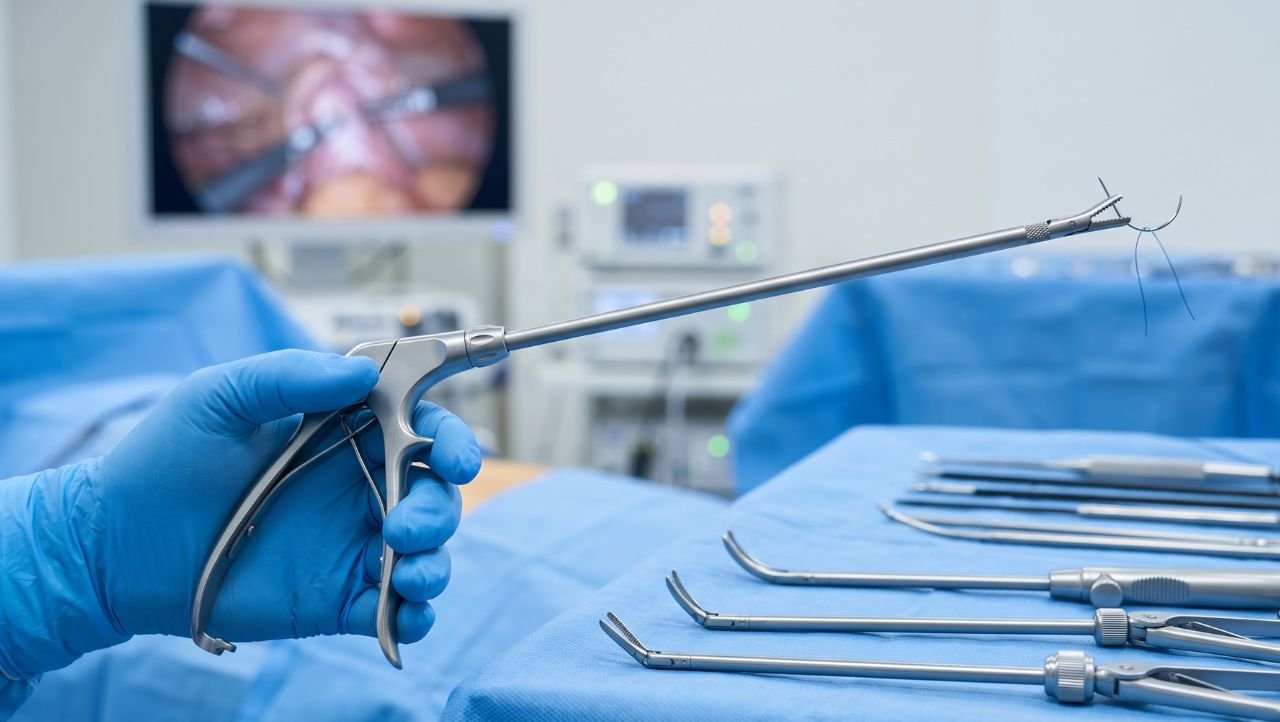
A laparoscopic needle holder is a surgical instrument used to grip, guide, and manipulate a suture needle during minimally invasive procedures. An extended shaft lets clinicians reach deep operational sites via a trocar or cannula while managing stitching movements safely from outside the patient. The tool typically features a handle, a slender shaft, and gripping jaws at the tip. Depending on the exact build, it might also include a locking ratchet, textured jaw inserts, or a rotating grip.
Unlike traditional needle drivers built for open surgery, laparoscopic variations must maintain precise control inside tight, confined spaces. Picking the right model depends heavily on the specific procedure, needle gauge, working angles, and personal clinician preferences.
What Are the Different Types of Laparoscopic Needle Holders?
Surgical needle drivers come in various builds to match unique stitching demands. Knowing these distinct variations helps purchasing departments pick the right tools for their surgical suites.
1. Straight-Jaw Needle Holders
Straight-jaw models deliver a direct way to handle sutures. They work wonders whenever clinicians can line up the tool and needle along a clean, favorable working angle. Their straightforward geometry makes them a reliable pick for standard laparoscopic stitching tasks. Buyers always need to weigh needle dimensions and available operating room clearance before finalizing their choice.
2. Curved-Jaw Needle Holders
Curved styles let doctors approach sutures from alternate angles. Depending on the build, the jaws bend left or right, helping clinicians navigate around tricky anatomy or reach tight spots where straight tools fall short. These variants shine during procedures demanding angled needle placement. Finding the ideal curve comes down to personal surgical technique and where the target tissue sits.
3. Tungsten Carbide Insert Models
Certain tools feature tungsten carbide inserts welded right onto the gripping surfaces. These rugged inserts create a long-lasting grip engineered to keep needles locked firmly in place. Purchasing agents need to verify that these inserts fit their chosen needle sizes and check if facility sterilization protocols match the upkeep demands of the instrument.
4. Rotating Needle Holders
Rotating variants feature a built-in mechanism that lets the jaws pivot freely without needing the clinician to twist the entire outer shaft like a traditional tool. This handy capability makes adjusting needle alignment much smoother whenever stitching angles shift mid-procedure. Since specific rotation mechanics differ across brands, checking compatibility with preferred surgical habits prior to placing a purchase order is always a smart move.
What Are the Main Uses of a Needle Holder in Laparoscopic Surgery?
The core job of this tool centers on gripping and steering needles while a clinician places stitches. That specific role shifts depending on the surgical procedure and the exact nature of the tissue being repaired. Common uses include:
- Internal suturing: Holding and guiding the needle when closing tissue or surgical incisions within the operative field.
- Tissue approximation: Supporting the placement of sutures that bring tissue edges together, as required by the procedure.
- Knot tying: Helping surgeons manage the needle and suture during intracorporeal suturing techniques.
- Repair and reconstruction: Assisting with suturing tasks in selected laparoscopic procedures, depending on clinical requirements.
- Working in confined spaces: Providing access to internal sites through a narrow port while allowing controlled needle movement.
The instrument works alongside other laparoscopic surgery instruments, including graspers, scissors, trocars, and cannulas. The complete set should be selected according to the procedure rather than relying on a single instrument’s features.
Make an Informed Instrument Selection
Picking the ideal needle holder requires matching jaw styles, shaft sizes, handle mechanisms, and gripping textures directly to what the surgical team needs. Running a structured evaluation makes it much easier for procurement specialists to weigh different options and build out a well-rounded instrument inventory.
When you plan to buy laparoscopic instruments, review technical specifications and compatibility alongside supply needs. At Salwan Surgicare, we encourage buyers to confirm their requirements before selecting instruments for their surgical facilities.
Frequently Asked Questions
Ans: A laparoscopic needle holder grips and guides a suture needle during minimally invasive procedures. Surgeons use it for internal suturing and knot tying, depending on the procedure and instrument configuration.
Ans: Straight jaws support a direct approach to needle handling, while curved jaws allow access from an angled position. The right laparoscopic needle holder depends on the operative site, working space, and surgeon preference.
Ans: Review the surgical application, jaw configuration, shaft dimensions, handle design, materials, and reprocessing instructions. Compare these details with other laparoscopic surgery instruments and confirm compatibility with the facility's existing systems.
Ans: Before ordering, confirm the instrument's configuration, dimensions, material details, documentation, and packaging requirements. Salwan Surgicare can discuss relevant product specifications and B2B supply options for buyers planning to buy laparoscopic instruments.
Ans: When you buy laparoscopic instruments, compare technical specifications, system compatibility, reprocessing requirements, supplier documentation, and ongoing supply needs. Select instruments that suit the intended procedures and the facility's procurement requirements.