Surgical Instrument Companies in USA: A Buyer’s Guide to Quality, Lead Times and OEM/Private Labelling
If you are searching for surgical instrument companies in USA, you are probably not looking for a directory. You are looking for a way to decide who deserves a place on your approved supplier list. For hospital procurement heads, ambulatory surgery centers, and distributors, the real questions are practical. Will the instruments keep their finish after hundreds of autoclave cycles? Can the supplier deliver on a predictable schedule? And can they support your own brand if you want to sell under it?
This buyer’s guide walks through those questions in the order a procurement team usually asks them: how the supplier landscape is structured, how to verify quality, how to plan realistic lead times, and how OEM and private labelling programs work. It is written as a sourcing framework, so you can apply it to any supplier you evaluate, whether domestic, offshore, or a mix of both.
Understanding the US Surgical Instrument Supply Landscape
US buyers generally source from three kinds of partners, and each one solves a different problem.
- Domestic manufacturers: shorter freight, easier site audits, and strong capability in specialised or complex devices, usually at a higher unit cost.
- Distributors and group purchasing channels: broad assortment and consolidated invoicing, but limited visibility into who actually makes the product and to what specification.
- International manufacturers and exporters: competitive pricing on high-volume reusable instruments, wide catalogues, and flexibility on customisation, with the trade-off of longer transit and a greater need to check documentation.
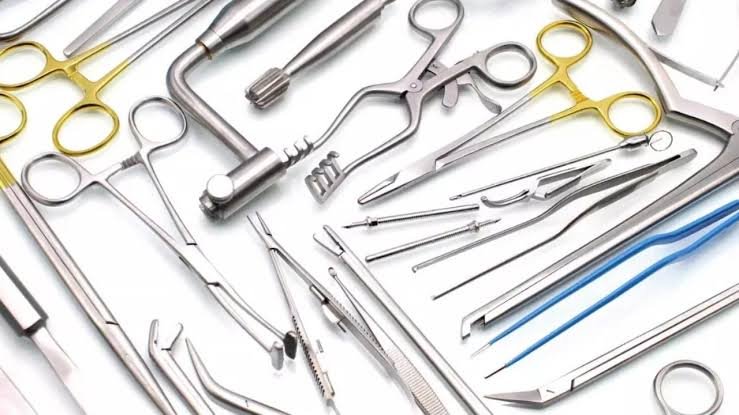
Many procurement teams run a blended model: domestic suppliers for urgent or specialised items, and an international manufacturer for the predictable, high-volume core of the instrument tray, such as forceps, scissors, needle holders, clamps, and retractors.
Quality: What to Verify Before You Place an Order
Price comparisons only make sense once quality is established. These are the checks that matter most.
- Quality management system: Look for ISO 13485 certification for medical devices, ideally backed by ISO 9001. Ask for the certificate, the issuing body, and the scope, because a certificate that does not cover surgical instrument manufacturing is of little use.
- US regulatory status: Most reusable hand-held surgical instruments are lower-risk devices, but manufacturers and importers still carry FDA obligations such as establishment registration and device listing. Ask your supplier to explain exactly how these are handled for the products you plan to buy, and confirm current requirements with your regulatory team, since rules change.
- Material and finish: Reusable instruments are normally made from medical-grade stainless steel. Ask which grade is used for each instrument family, how the surface is passivated, and what the finish is. A consistent passivated surface is the best defence against corrosion and staining.
- Performance testing: Confirm how jaw alignment, ratchet engagement, scissor sharpness, and tip meeting are checked, and at what stage of production.
- Autoclave durability: Ask how instruments are validated for repeated steam sterilisation, and request reprocessing instructions that you can hand to your sterile processing department.
- Warranty: A written guarantee covering rust, sharpening, and breakage shows how much confidence a manufacturer has in its own product.
A Simple Supplier Evaluation Checklist
| Criterion | Question to ask | Warning sign |
| Certifications | Can you share current FDA, ISO 13485 and CE documents? | Expired or unverifiable certificates |
| Sampling | Can we test samples before a bulk order? | Reluctance to send samples |
| Batch consistency | How is quality checked across repeat orders? | No documented QC checkpoints |
| Traceability | Do instruments carry batch or lot marking? | No marking on instruments |
| Documentation | What papers ship with each order? | Vague or missing paperwork |
| After-sales | How are defects and returns handled? | No written policy |
Looking for a Dependable Surgical Instrument Manufacturer?
FDA, CE and ISO 13485 certified, export-ready supply of forceps, scissors, retractors, laparoscopic and urology instruments.
REQUEST A QUOTE
Lead Times: How to Plan Realistically
Lead time is rarely one number. It is the sum of several stages, and problems usually appear in the stages buyers forget to ask about.
- Production: Standard catalogue items move faster than custom-designed or heavily modified instruments, which may need new tooling or fixtures.
- Quality control and finishing: Inspection, passivation, and cleaning happen after machining. When schedules are tight, ask which of these stages is protected and which is compressed.
- Branding and packaging: Private label artwork, labels, instructions for use, and custom packaging add approval cycles. Delays here usually come from slow artwork sign-off rather than from production.
- Shipping and customs: Air freight is faster and more expensive. Sea freight is cheaper but takes several weeks door to door. Import clearance adds time, particularly when paperwork is incomplete.
Ask every surgical instruments supplier for a written lead-time estimate broken down by these four stages, along with their policy when a shipment slips. For recurring needs, a staggered delivery schedule under an agreed blanket order reduces both risk and cost. Because duties, freight rates, and import rules change often, confirm current figures before you commit to a delivery date.
OEM and Private Labelling: What the Process Looks Like
OEM and private label programs let a distributor or healthcare brand sell manufacturer-built instruments under its own name. A well-run program usually follows these steps:
- Product selection: choose from the manufacturer’s catalogue or request modifications.
- Sample approval: evaluate pre-production samples for finish, function, and markings.
- Branding: agree on laser marking, labels, instructions for use, and packaging artwork.
- Documentation: align on certificates, label content, and product identification requirements for your market.
- Production and inspection: confirm batch sizes, QC checkpoints, and packing specifications.
- Shipment and repeat orders: set reorder points so supply stays continuous.
One point deserves attention. When you sell under your own label, you take on responsibility for labelling and regulatory compliance in your market, including device identification requirements. Choose a manufacturer that understands this and can supply the documentation you need, rather than one that simply offers to print your logo.
Looking Beyond the Unit Price
Total landed cost includes freight, duties, packaging, rework, and the cost of a bad batch. A slightly higher unit price from a supplier with consistent quality and honest lead times is usually cheaper over a year than a low price that brings returns, shortages, and delays. Track defect rates, on-time delivery, and responsiveness across your first few orders, and use that data in your annual supplier review.
Why Buyers Work with Salwan Surgicare
Salwan Surgicare has manufactured surgical instruments in India since 1997 and supplies hospitals, distributors, and OEM brands worldwide, including buyers in the USA and Canada. The company holds US FDA, ISO 13485:2016, ISO 9001:2015, and CE certifications, offers a catalogue of more than 38,000 instruments, and backs every instrument with a quality guarantee covering rust, sharpening, and breakage.
Buyers can explore general surgery instruments, laparoscopic instruments, orthopedic instruments, and urology instruments, along with core categories such as forceps, scissors, needle holders, and retractors. Bulk orders, export documentation, and OEM and private label support are handled through the global export team, and detailed specifications are available in the product catalogues.
Conclusion
Choosing among surgical instrument companies in USA and abroad comes down to evidence: verified certifications, tested samples, transparent lead times, and a clear plan for private labelling. Treat your first order as a trial, measure the results, and scale with the partner that performs. When you are ready to start, request a catalogue or a sample and let the supplier show you what consistency looks like.
Launch Your Own Brand With Private Label Surgical Instruments
Custom branding, export-ready packaging, and reliable repeat supply for distributors and medical brands.
BECOME A DISTRIBUTOR