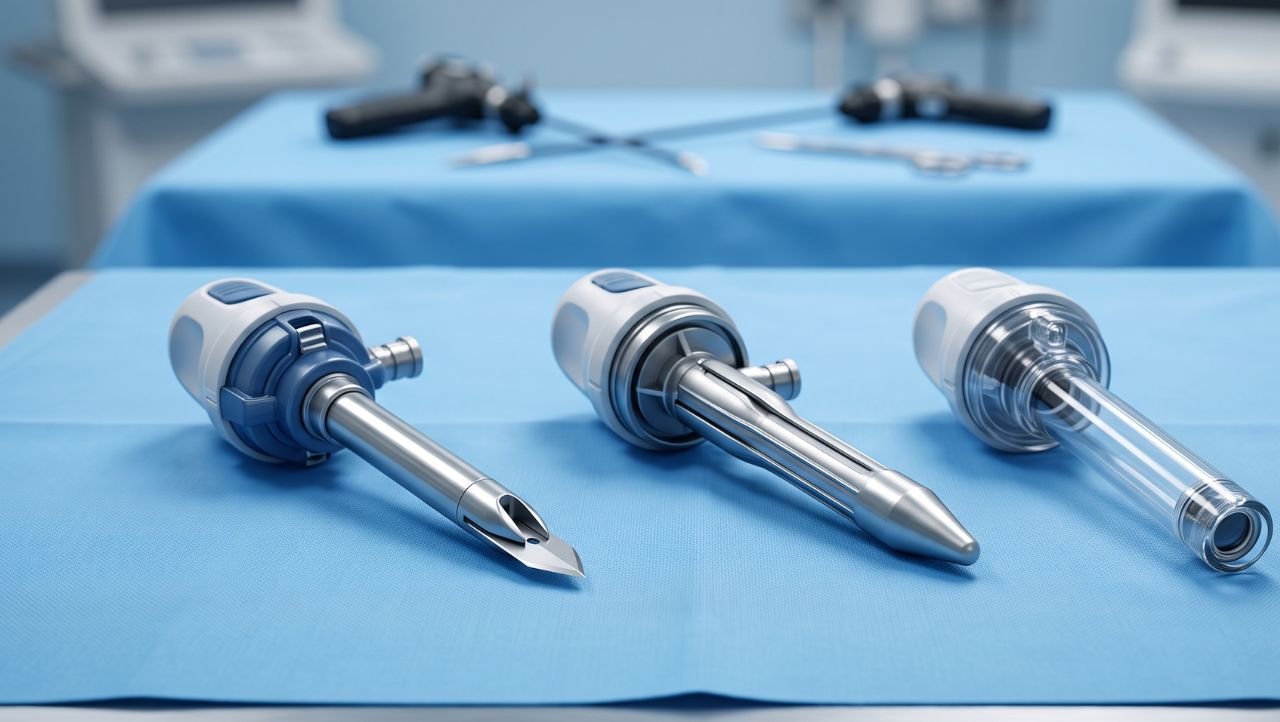
Types Of Trocars In Laparoscopic Surgery: Bladed Vs Bladeless Vs Optical Trocars
Laparoscopic surgery depends on tiny cuts, specialized entry ports, and precise instruments to operate with minimal trauma to nearby tissue. Within this toolkit, trocars serve as a critical pathway for sliding cameras and surgical tools directly into the abdominal cavity. The choice of trocar affects how entry is secured and how instruments slide through during an operation. Various designs fit distinct surgical methods, spanning bladed, bladeless, and optical variants. Knowing these distinctions allows surgical teams to pick appropriate laparoscopic instruments based on the specific procedure, access technique, and surgeon preference.
This guide compares the three standard trocar variations, breaks down their mechanics, and covers the core factors surgical teams weigh when choosing laparoscopic surgery instruments for minimally invasive operations.
What Is A Trocar Used For In Laparoscopic Surgery?
A trocar functions as an access port that establishes or holds an opening through the abdominal wall. Once locked in place, it permits a camera, grasper, scissors, stapler, or alternate tool to reach the surgical field. Standard parts include a cannula, obturator, valve, and seal, though the precise build differs by manufacturer and design.
Trocars are generally selected based on:
- Surgical procedure and access technique
- Required cannula diameter
- Instrument compatibility
- Entry method
- Surgeon preference
- Patient and operative considerations
Since entry marks a critical first step in many minimally invasive procedures, the trocar must sync smoothly with the rest of the laparoscopic instruments deployed in the field.
What Are Bladed Trocars?
Bladed trocars rely on a sharp tip or cutting blade to pierce the abdominal wall, creating an opening for the cannula to slide through. This style has long served as a standard method for securing laparoscopic access and comes in various dimensions. Choosing a specific size depends on the operation and the width of the tools passing down the cannula.
Key characteristics of bladed trocars
- Sharp or cutting obturator design
- Direct penetration through tissue
- Available in different cannula sizes
- Suitable for established surgical access techniques
- Requires appropriate handling and insertion technique
With bladed trocars, careful insertion is essential since the sharp point is built to cut through tissue. Surgeons rely on their preferred technique and hospital protocols when securing access.
What Are Bladeless Trocars?
Bladeless trocars use a blunt, non-cutting tip instead of a traditional sharp blade. Rather than slicing through tissue, the point parts or stretches fibres as the unit moves forward. Teams often choose this style when they want an alternative entry approach. Exact builds and insertion steps shift depending on the specific trocar manufacturer.
Key characteristics of bladeless trocars
- Non-cutting obturator design
- Tissue separation or dilation during entry
- Available in multiple sizes
- Can be used with different laparoscopic procedures
- Selection depends on surgical technique and preference
Skipping a traditional blade is the core difference separating bladeless trocars from standard cutting access devices. Even so, picking one over the other always comes down to the specific operation and the surgeon’s practiced entry method.
What Are Optical Trocars?
Optical trocars feature a clear tip that lets surgeons view tissue layers through a laparoscope while advancing the device. This provides live visual feedback during entry rather than depending purely on touch. Build quality, scope compatibility, and viewing clarity vary across different brands.
Key characteristics of optical trocars
- Designed for visualized entry
- Used with a compatible laparoscope
- Helps the surgeon observe the advancing tip
- Available in different sizes and configurations
- Requires appropriate visualization equipment
Optical trocars shine when teams want direct visual confirmation during entry. Like any access tool, deployment ultimately hinges on the specific operation, available gear, and the surgeon’s practiced technique.
Bladed Vs Bladeless Vs Optical Trocars: What Is the Difference?
| Trocar type | Main design | Entry approach | Common consideration |
| Bladed | Sharp or cutting tip | Cuts through tissue | Direct penetration technique |
| Bladeless | Non-cutting tip | Separates or dilates tissue | Tissue access without a conventional blade |
| Optical | Visualization-enabled tip | Entry under direct visualization | Requires compatible visualization setup |
Choosing a port isn’t about grabbing the newest model on the shelf. Every version features a unique build tailored to specific surgical strategies. Operating teams weigh access methods, patient anatomy, tool requirements, and personal preference when making the call.
Why Does Laparoscopic Trocar Selection Matter?
Trocars form the access point through which several laparoscopic instruments enter the surgical field. Their dimensions, sealing mechanisms, and entry design therefore need to fit the overall procedure.
For hospitals and surgical facilities, maintaining a suitable selection of laparoscopic surgery instruments can make preparation more organized. It also allows surgical teams to choose equipment according to the requirements of different procedures instead of relying on one access design for every case.
At Salwan Surgicare, we manufacture and supply a broad range of surgical instruments for different clinical requirements, supporting hospitals and distributors with products designed for professional surgical applications.
Making The Right Choice For Laparoscopic Access
Bladed, bladeless, and optical trocars differ mainly in how they establish access and, in the case of optical designs, how visualization is incorporated into entry. Bladed trocars use a cutting tip, bladeless trocars use a non-cutting approach, while optical trocars support visualized entry. The right choice depends on the procedure, access technique, cannula size, instrument compatibility, and surgeon preference. These factors should be considered alongside the complete range of laparoscopic surgery instruments required for the procedure.
For reliable sourcing, Salwan Surgicare offers a wide range of surgical instruments manufactured for diverse operating-room requirements, helping hospitals and distributors select suitable products for their clinical and procurement needs.
Frequently Asked Questions
Ans: Bladed trocars use a sharp cutting tip for tissue penetration, while bladeless trocars use a non-cutting design to separate or dilate tissue.
Ans: Optical trocars are designed for visualized entry, allowing the surgeon to observe the advancing tip through a compatible laparoscope during access.
Ans: Hospitals should consider the procedure, instrument size, compatibility, material quality, sterilization requirements, and the surgeon’s preferred technique when selecting laparoscopic instruments.
Ans: We should consider the surgical application, instrument compatibility, dimensions, handling requirements, and hospital protocols when choosing laparoscopic surgery instruments.
Ans: Yes, Salwan Surgicare manufactures and supplies a range of laparoscopic surgery instruments and other surgical instruments for professional healthcare applications.