Laparoscopic Graspers: Types, Uses and How to Choose the Right Grasper
Every laparoscopic procedure depends on the surgeon’s ability to hold, retract, and manipulate tissue safely through small incisions — and that’s exactly what a laparoscopic grasper is designed to do. As one of the most frequently used instruments in minimally invasive surgery, the right grasper can make the difference between smooth tissue handling and unnecessary trauma.
Salwan Surgicare manufactures a comprehensive range of laparoscopic graspers, engineered for precision, control, and reliable performance across general surgery, gynaecology, and urology procedures. In this blog, we walk through the main types of laparoscopic graspers, where each is used, how they compare with traditional forceps, common handling mistakes to avoid, and how to choose the right one for your surgical needs.
What Is a Laparoscopic Grasper?
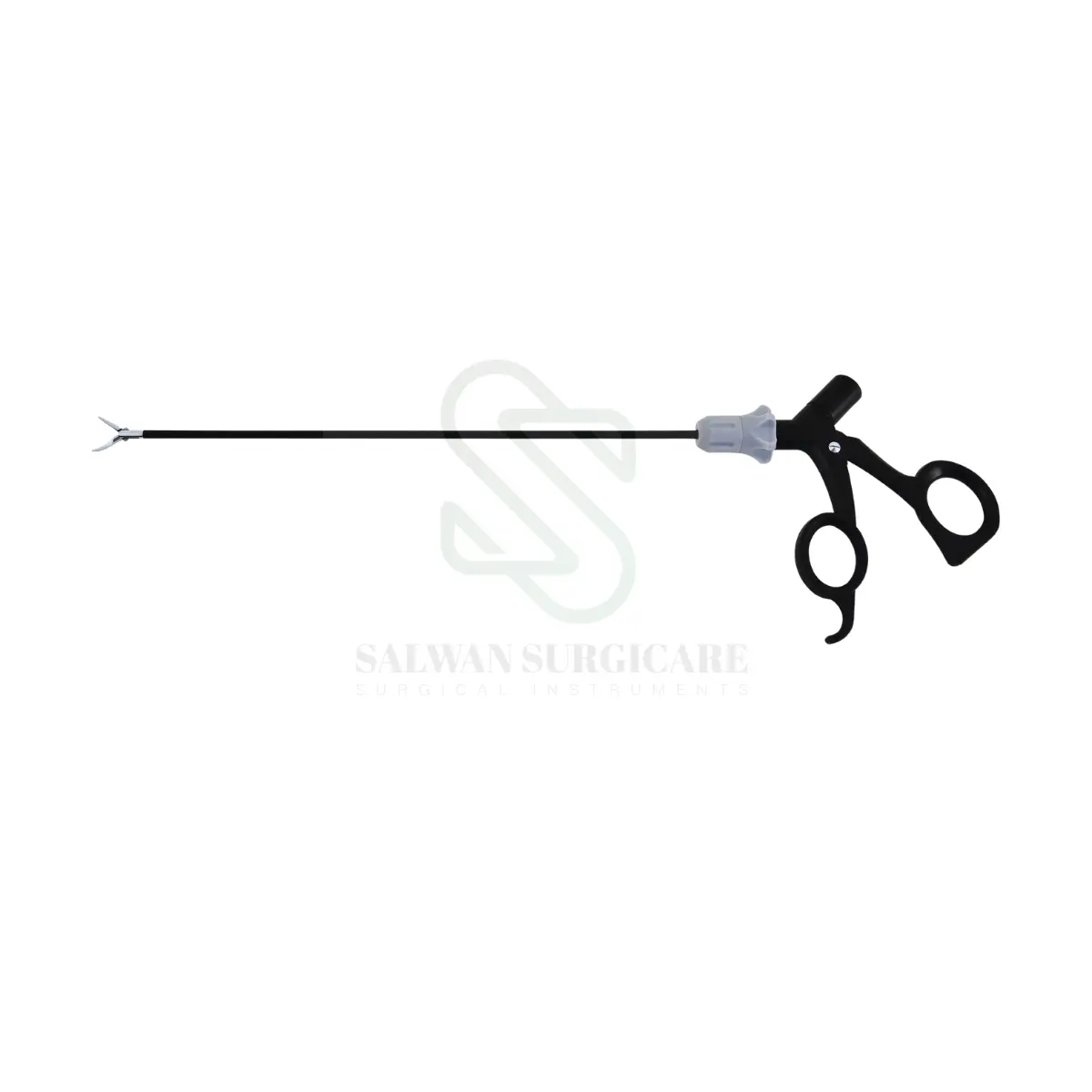
A laparoscopic grasper is a long, slender instrument passed through a trocar to hold, lift, retract, or manipulate tissue during minimally invasive surgery. It typically consists of a handle, a shaft, and a jaw mechanism at the tip, with jaw designs varying widely depending on the intended tissue type and level of grip required.
Graspers range from atraumatic designs that minimise tissue damage to toothed or serrated jaws built for a firmer hold on tougher structures. Choosing the correct type is essential — using an inappropriately aggressive grasper on delicate tissue can cause perforation or bleeding, while an insufficiently secure grip on tougher tissue can slow the procedure down and compromise surgical efficiency.
Types of Laparoscopic Graspers
- Maryland Dissector — fine, curved jaws designed for precise dissection and tissue manipulation, commonly used in gallbladder and general surgery procedures.
- Babcock Grasper — broad, fenestrated jaws designed to hold delicate tubular structures such as the bowel or fallopian tubes without crushing them.
- Bowel Grasper — long, atraumatic jaws designed specifically for gentle handling of bowel tissue, reducing the risk of injury during manipulation.
- Allis Grasper — provides a firmer grip, useful for holding tougher or thicker tissue during general and gynaecological procedures.
- Right Angle Grasper — an angled jaw design that helps surgeons access difficult anatomical areas with improved visibility and control.
- Croce-Olmi Grasper — a specialised jaw design offering a secure grip for controlled tissue grasping and retraction.
- Bipolar Vessel Sealer Cutter — combines grasping with vessel-sealing energy delivery for procedures requiring simultaneous grasp and coagulation.
Laparoscopic Graspers vs Traditional Surgical Forceps
It’s worth understanding how laparoscopic graspers differ from the open-surgery forceps most surgical teams are already familiar with. Traditional forceps are handled directly, giving the surgeon immediate tactile feedback and a wide range of natural wrist motion. Laparoscopic graspers, by contrast, are operated at a distance through a trocar, so the surgeon relies on visual feedback from the camera and a mechanical handle to translate hand movement into jaw action at the tip.
This difference has real design implications. Laparoscopic graspers need longer shafts, more refined jaw geometry, and often a rotating shaft to compensate for the reduced range of motion inherent in port-based access. Grip strength also needs to be calibrated carefully, since the surgeon cannot feel tissue resistance as directly as with open forceps. This is why atraumatic jaw designs, fenestrated tips, and ergonomic locking handles are so important in laparoscopic grasper design — they help restore some of the control and feedback that open surgery provides naturally.
Key Uses of Laparoscopic Graspers in Surgery
- General surgery — used in cholecystectomy, appendectomy, and hernia repair to hold and retract tissue while dissection or suturing is carried out.
- Gynaecology — used in tubal procedures, myomectomy, and hysterectomy for handling delicate reproductive tissue with minimal trauma.
- Urology — supports minimally invasive kidney and bladder procedures where precise tissue control is essential in a confined space.
- Bariatric and gastrointestinal surgery — used for tissue retraction and organ handling in confined abdominal spaces during weight-loss and GI procedures.
Common Mistakes to Avoid When Using Laparoscopic Graspers
- Using a toothed or serrated grasper on delicate tissue such as bowel or fallopian tubes, which can cause perforation or tearing.
- Applying excessive jaw pressure without direct tactile feedback, since over-gripping is a common cause of unintended tissue injury in laparoscopic surgery.
- Mismatching shaft diameter with trocar size, leading to gas leakage, poor stability, or restricted instrument movement.
- Skipping routine jaw-alignment checks, which can allow a grasper with worn or misaligned jaws to slip during a critical step of the procedure.
- Reusing single-use graspers beyond their intended cycle, or reprocessing reusable graspers incorrectly, both of which can compromise grip integrity over time.
How to Choose the Right Laparoscopic Grasper
- Tissue type — delicate organs need atraumatic jaws; tougher tissue may call for toothed or serrated jaws.
- Procedure type — dissection tasks call for Maryland-style graspers; bowel retraction calls for dedicated bowel graspers.
- Jaw articulation — rotating shafts improve manoeuvrability within confined surgical spaces.
- Trocar compatibility — confirm the grasper’s shaft diameter matches your trocar size before ordering.
- Reusable vs single-use — reusable stainless-steel graspers, built for repeated sterilisation, typically offer lower long-term cost for high-volume hospitals, while single-use graspers can simplify infection-control protocols for lower-volume settings.
- Grip mechanism — locking handles help maintain tension without adding to surgeon fatigue during longer procedures.
Maintenance and Sterilisation Tips
Regular inspection of jaw alignment, insulation (for energy-enabled devices), and shaft straightness extends instrument life. Use autoclave-compatible trays, avoid mixing graspers with non-stainless instruments during cleaning, and inspect insulation on bipolar graspers regularly to maintain safe, consistent energy delivery. Establishing a documented inspection routine before and after every procedure also helps surgical teams catch early signs of wear before they affect performance in the operating room.
Explore Our Full Range of Laparoscopic Graspers
Atraumatic, fenestrated and articulating graspers engineered for precision and control.
SHOP LAPAROSCOPIC GRASPERSWhy Choose Salwan Surgicare for Laparoscopic Graspers
As a leading surgical instruments manufacturer since 1997, Salwan Surgicare supplies CE and ISO 13485:2016 certified laparoscopic graspers to hospitals, distributors, and medical companies worldwide. Every grasper is manufactured from medical-grade stainless steel, inspected for jaw alignment and smooth mechanical function, and backed by a 1-year quality guarantee.
Frequently Asked Questions
What is the difference between an atraumatic and a traumatic grasper?
An atraumatic grasper has smooth, rounded jaws designed to hold delicate tissue without crushing it, while a traumatic grasper has teeth or serrations that provide a firmer grip for tougher tissue where a small amount of tissue damage is acceptable.
Can laparoscopic graspers be reused after sterilisation?
Yes, reusable laparoscopic graspers made from medical-grade stainless steel are designed to withstand repeated autoclave sterilisation cycles without losing jaw alignment or grip strength, provided they are inspected and maintained correctly.
How do I know which grasper size fits my trocar?
Grasper shaft diameter must match the internal diameter of your trocar — most laparoscopic graspers are available in 5 mm and 10 mm configurations, so confirm compatibility with your existing trocar set before ordering.
Conclusion
Choosing the right laparoscopic grasper comes down to matching jaw design and grip strength to the tissue and procedure at hand. From atraumatic bowel graspers to firm-grip Allis graspers, having the correct instrument on your tray improves both surgical control and patient safety. Explore Salwan Surgicare’s complete laparoscopic instruments range to build a dependable, CE-certified laparoscopic set for your facility.
Get a Custom Quote for Bulk Grasper Orders
Consistent quality, export-ready packaging, and reliable supply for hospitals and distributors worldwide.
REQUEST A QUOTE