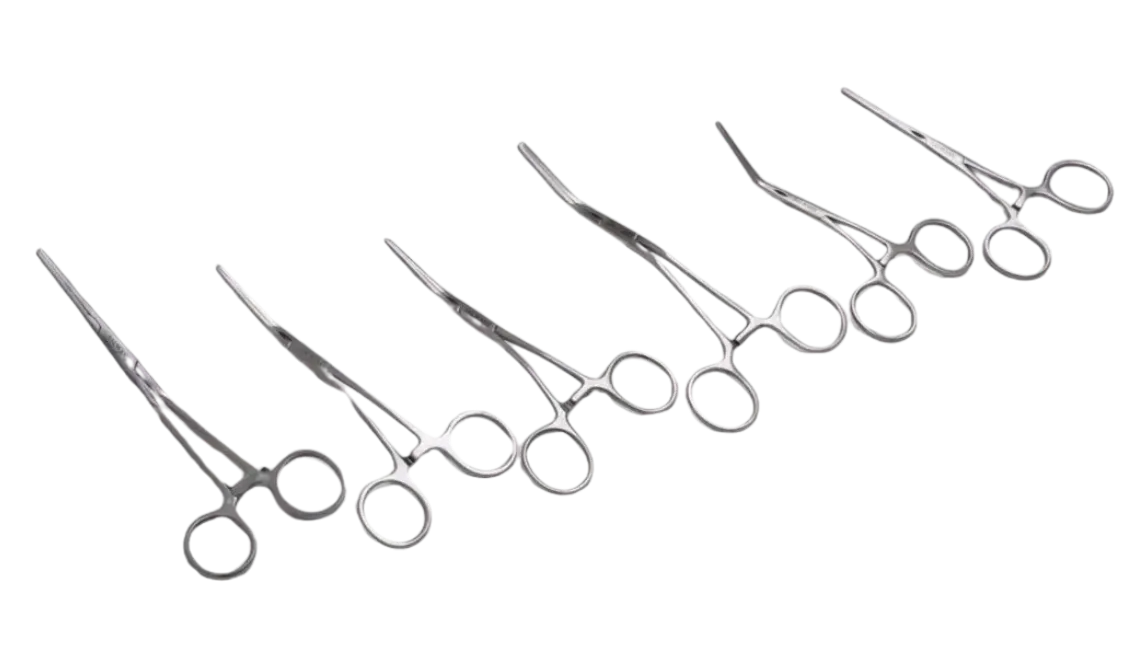
The Indian healthcare market is scaling fast — new hospitals, new multispecialty centers, and new surgical units opening every quarter. But with growth comes responsibility: choosing the right surgical instruments, understanding equipment names, and sourcing from manufacturers who actually deliver reliability.
If you’re a hospital administrator, surgeon, or distributor, you already know the chaos that comes with poor-quality tools: delays, re-sterilization failures, inaccurate cuts, and worst of all — repeat purchases that burn through budgets.
This guide cuts through the noise and helps you understand what to look for across major surgical categories while weaving in key insights on instruments you need to be paying attention to.
1. Why Choosing the Right Surgical Instruments
Matters More Than Ever
Surgical care today demands consistency, accuracy, and speed. Whether it’s general surgery, laparoscopy, urology, or ENT, clinicians rely on instruments that perform predictably every single time.
But here’s what most buyers miss:
- Instruments differ drastically between specialties.
- Names can overlap, but functions don’t.
- Not all “stainless steel” is created equal.
- India’s market is full of mixed-quality imports that look identical to CE-certified instruments but perform nothing alike.
This is why understanding surgical instruments names, their use cases, and their manufacturing standards is critical — not optional.
2. Specialty-by-Specialty Breakdown: What You
Need to Know (and Where to Explore More)
General Surgery Instruments
General surgery remains the backbone of every hospital. The most frequently used items include scissors, retractors, clamps, and suturing tools. If you want a comprehensive, updated list of surgical equipment names, you can explore our main category here:
Explore: General Surgery Instruments
Laparoscopic Instruments
Minimally invasive surgery isn’t slowing down — it’s exploding. Searches for laparoscopy instruments, laparoscopic instruments set, and laparoscopic equipment names keep rising.
Surgeons now want:
- Ergonomic insulated handles
- High-precision jaws on graspers
- Smooth trocar insertion
- Reliable sealer cutters
Explore: Laparoscopic Instruments
Urology Instruments
Urology is becoming one of the biggest search categories with terms like urology instruments, urology surgical instruments, instruments used in TURP surgery, and cystoscopy instruments names gaining traction.
Most hospitals don’t realize how specialized modern urology instruments have become. TURP, PCNL, URS — each requires its own set.
Explore: Urology Instruments
ENT Instruments
ENT is a high-search-volume segment, especially ENT instruments name, ear instruments, and ENT instruments set. These instruments are highly technique-specific and demand precision.
Explore: ENT Instruments
Neurosurgery Instruments
Precision is everything in neurosurgery. These tools must balance rigidity with delicacy — a nearly impossible combination for low-quality manufacturers.
Explore: Neurosurgery Instruments
Orthopedic Instruments
Fixation, trauma care, joint reconstruction — orthopedic tools are among the toughest and most mechanically demanding.
Explore: Orthopedic Instruments
Needle Holders
Needle holders are among the most misunderstood instruments online. Search volume for needle holder, needle holder types, needle holder uses, and parts of needle holder is massive.
The Mayo-Hegar, Crile-Wood, Castroviejo, and Mathieu each solve different problems — yet most buyers treat them as interchangeable. Big mistake.
Explore: Needle Holders
Forceps
Forceps are used in all types of surgery – no matter what the specialty. They are one of the most widely used instruments in the OT all over the world.
Problem is: 90% of buyers don’t know what a hemostat vs. artery forceps vs. dressing forceps actually does.
Explore: Forceps
3. How to Choose the Right Manufacturer (and Avoid
the Hidden Pitfalls)
Let’s be blunt: technical specs are one thing, but choosing the wrong manufacturer is where hospitals lose the most money.
Here’s your simple checklist:
- Always choose 410/420 grade stainless steel for surgical tools.
- Look for CE certification — real, not printed.
- Ensure tools pass a locking test, jaw alignment test, hardness test, and autoclave test.
- Ask for instrument weights — low-quality items are usually lighter.
- Never buy from suppliers who don’t provide photos of the actual instrument.
4. Final Thoughts — and the Smartest Next Step
The Indian healthcare ecosystem is only going to grow more demanding. Surgeons expect better tools, patients expect safer outcomes, and hospitals expect suppliers who can keep up.
If you want clarity on any specific category — or you’re sourcing for a new facility — explore the pages linked above. They’re loaded with deeper insights, instrument lists, and product guides.
Looking to source high-quality surgical instruments within India? We manufacture and supply a complete range of CE-certified instruments trusted by hospitals, surgeons, and distributors across the country – Contact Us
If you’re an importer, distributor, or healthcare provider outside India, we supply CE-certified surgical instruments worldwide with fast export support – Contact Us
For North America – Salwans USA